The “9H Hardness” Lie: Why Your Premium Screen Protector Still Chipped
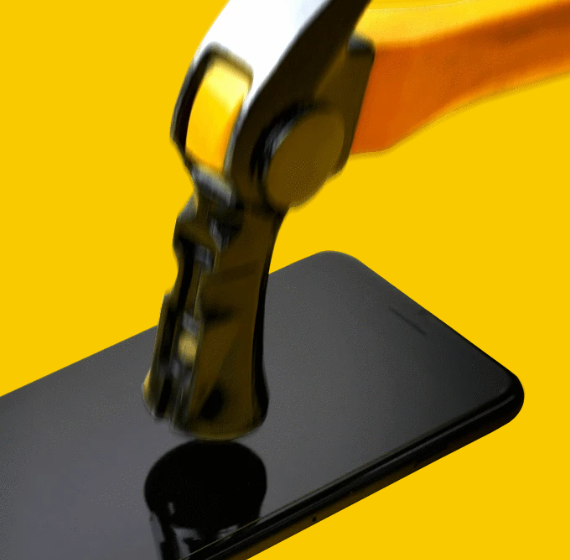
We’ve all been there. You drop forty dollars on a “military-grade, 9H hardness” screen protector, carefully align it on your phone, and put it in your pocket with a single set of house keys. Two hours later, you pull it out to find the edge is already chipped. It’s infuriating.
But the hard truth of the smartphone accessory industry is that marketing departments rely heavily on consumers not understanding basic materials science.
The “9H” Misdirection
Let’s clear the air immediately: “9H” does not mean diamond-level indestructibility. It simply refers to the graphite pencil hardness scale.
Claiming a screen protector has 9H hardness just means a 9H pencil won’t scratch it. Congratulations, your phone is safe from aggressive stationary.
While scratch resistance is nice, scratches aren’t what destroy your phone’s display—kinetic impact and edge pressure are. When we evaluate material quality in our labs, we completely ignore marketing badges and look directly at the glass composition.
Here is what the industry actually uses:
- Soda-Lime Glass: Found in 90% of cheap Amazon multi-packs. It is highly brittle, snaps under minimal pressure, and chips easily at the edges.
- Standard Tempered Glass: Used by mid-tier brands. It undergoes a basic heat treatment. It’s better than soda-lime, but still heavily prone to lateral fracturing.
- Aluminosilicate: Used by premium brands like Belkin. It features a denser chemical structure that resists surface wear much better.
The High Alumina Advantage
If you want to stop edge-chipping and actually protect your OLED panel, you need High Alumina glass.
High Alumina is chemically strengthened through a deep ion-exchange process, giving it a significantly higher structural density. Instead of instantly transferring the shock of a drop directly into your actual screen, it absorbs and disperses the kinetic energy.
This is exactly why Bulldog consistently sweeps our durability categories. When you combine their High Alumina glass with a 2.5D full-cover design, the weakest point of your phone—the exposed edge—finally gets the structural reinforcement it actually needs. Stop paying for buzzwords; start paying for better glass.